Production

Production

ON-SET EXECUTION
Production

Where the page becomes the frame — Sagar World’s production process unites cast, crew, design and direction to bring grand stories to life on set.

STEP 01
Narration
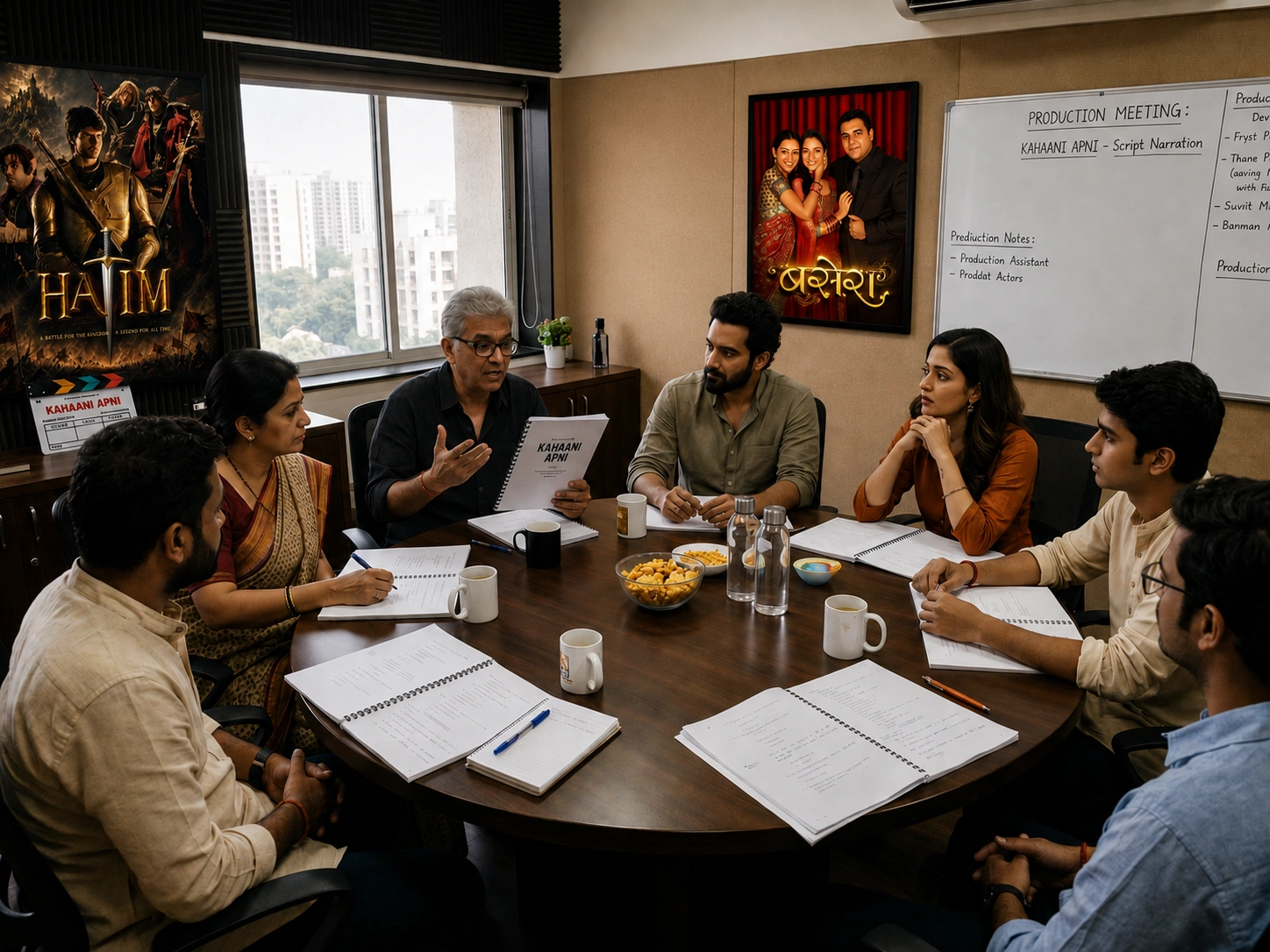
With the team and actors in place, the screenplay is brought to life through narration — aligning vision, performance and intent before a single frame is shot.
01

Narration To The Cast

The team is ready, and so are the actors. In case of movies and web series, since the screenplay is fixed, a complete narration is provided to the primary actors — especially the established faces of the films — and if their interest is retained, they are brought on board. However, in TV shows, the screenplay is open to many changes, so only the pilot episode is narrated and the course of action is decided.

STEP 02
Budget & Scheduling
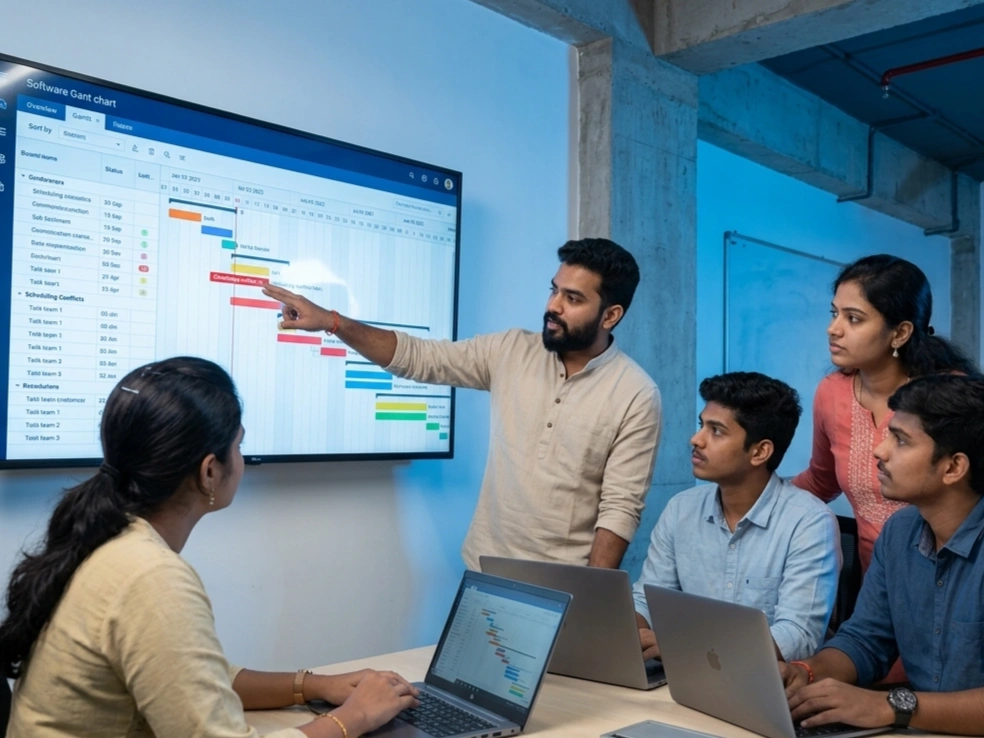
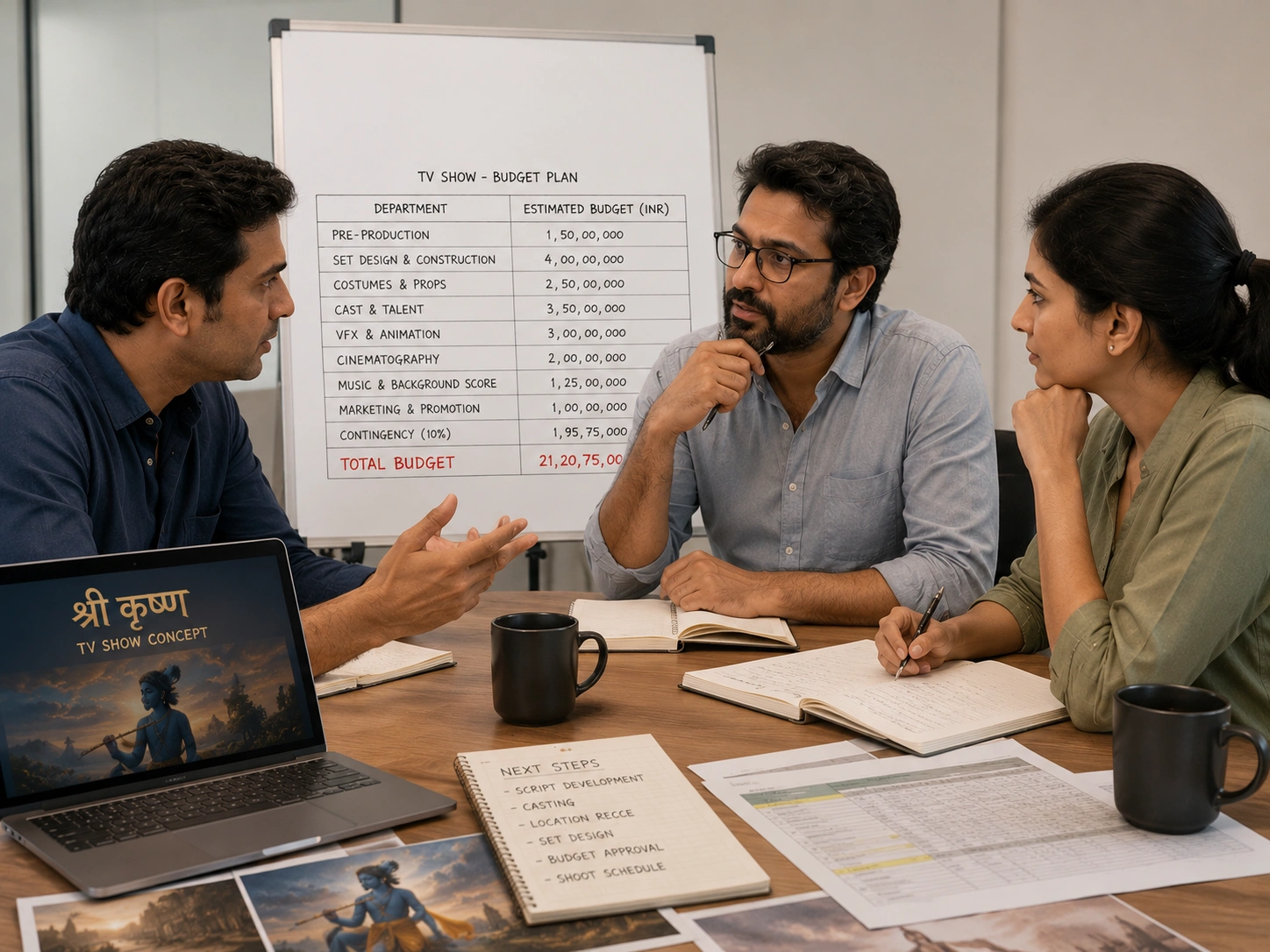
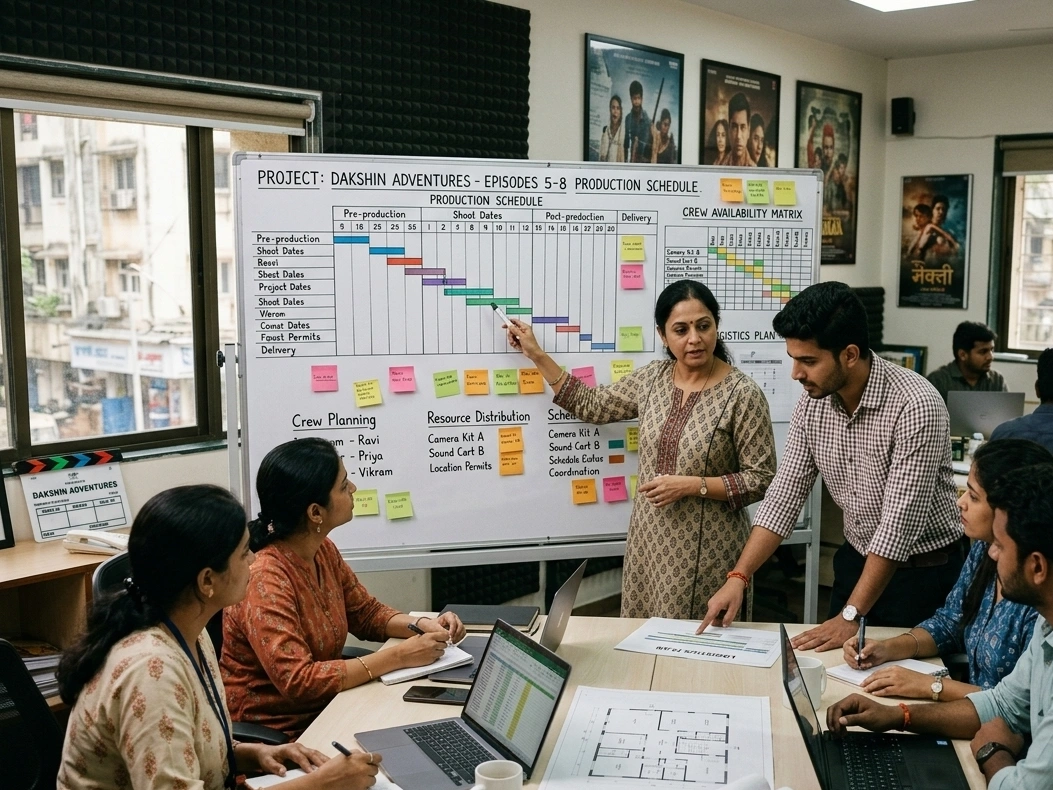
When the producer finds the idea bankable, budget is ensured and scheduling is decided. Mythological and historical shows often require 10x the budget of normal productions due to the grand investment in costumes, sets, VFX and production design.
01

Division

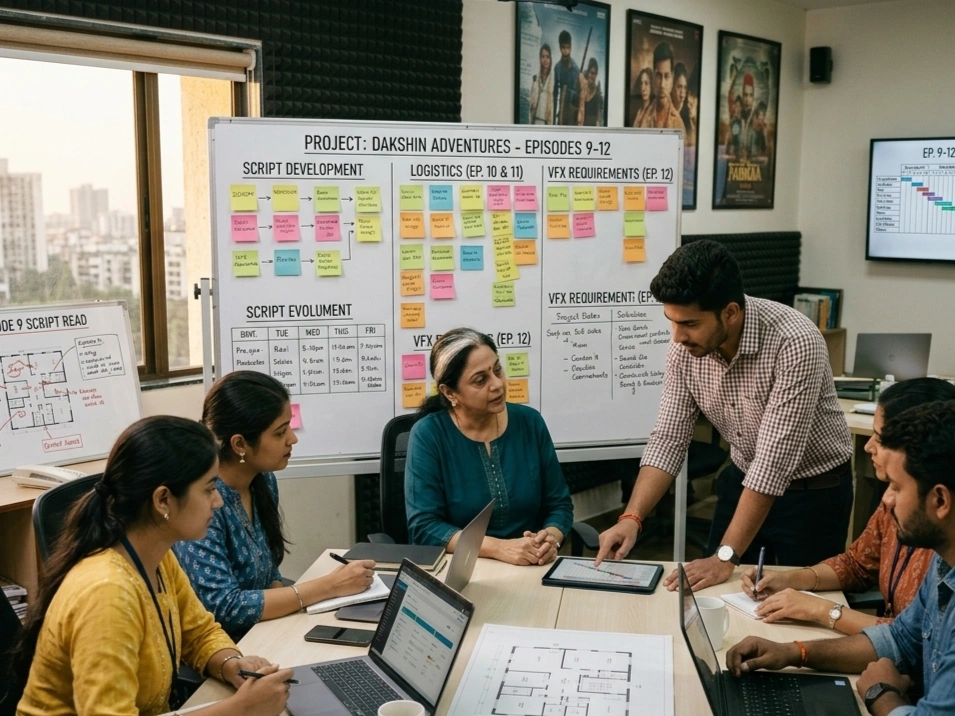
Budget analyzation starts with breaking down the script into pages per day — deciding how many pages are planned for each scheduled production day. Budgeting, output and efficiency are co-dependent and shift with the format. In television, 10–15 minutes are shot from a 22-minute episode in a single day, whereas in films, the output per day is just one or two minutes. A lot of budgeting depends on the final edit output per day.

02

Calculation

One day of shoot is generally set to one page of the script. Dialogues are easier to shoot than effects-heavy sequences, so action estimates double the page length, and complex blocking quadruples it. Cast members are categorized on a script breakdown template, and their fee value is multiplied by a correction factor of 1.5 or 2 to account for partial shoot days. For background actors, the math is direct — 50 actors for a one-page scene equals 50 background actor days.

03

Production Design Estimate

There is no one simple formula — it's completely dependent on the face value of props, stunts and effects used. Stunt doubles, special effects teams, stunt coordinators and second-unit camera teams all affect the estimate. A major proportion of the budget also goes into vehicles, critters and animals, which need special estimates for crew, rental, insurance, diet and tamers. Animals and babies — being unpredictable — require extra care that is added to the budget.

04

Crew Rates

The full script length is divided by the pages-per-day to determine crew needs — a 100-page script at 5 pages a day means 20 days of crew. Crew breakdown includes directors, producers, sound team, craft services, gaffing and electric, art department, camera, wardrobe, transportation, location management, hair and makeup, and property. Negotiations make up a huge part — rates depend on skill, experience, and union limits on hours and pay.

05

Final Estimate

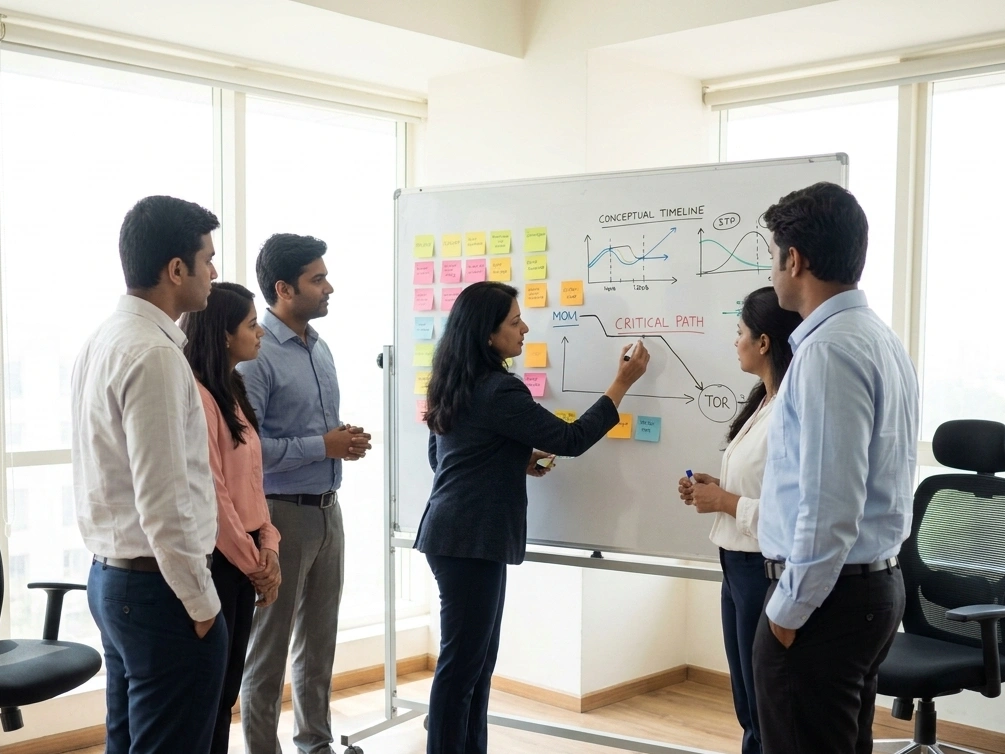
A seasoned production manager calculates every variable — actor dates, weather, travel time, studio and location bookings, sequence difficulty — to figure out a schedule that matches all human and logistical limits. Every sector is laid out on the script budget binding sheet and totalled. Once the budget is settled within the director's vision and potential final edit, the field work begins.

STEP 03
Art & Production Design
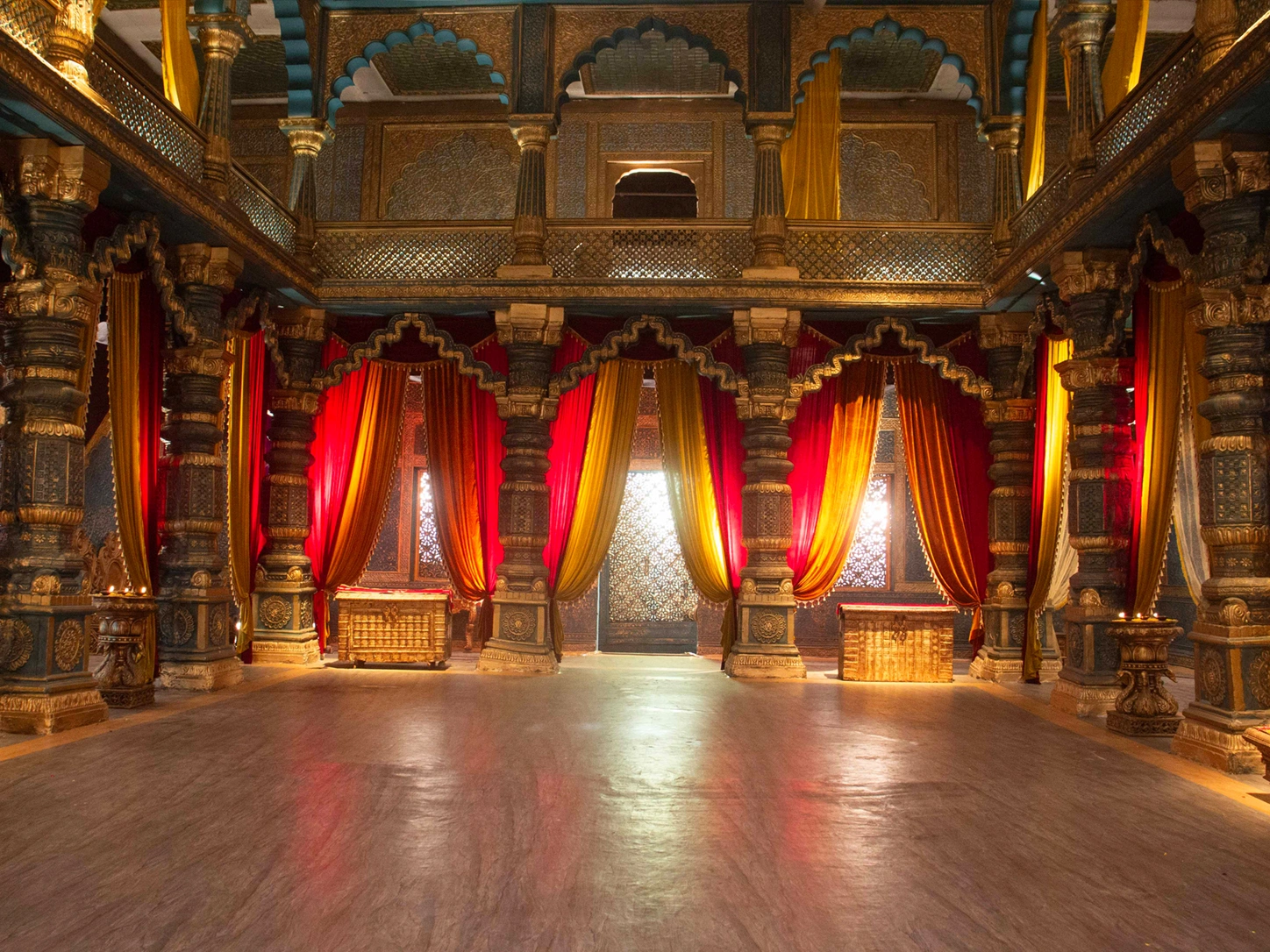
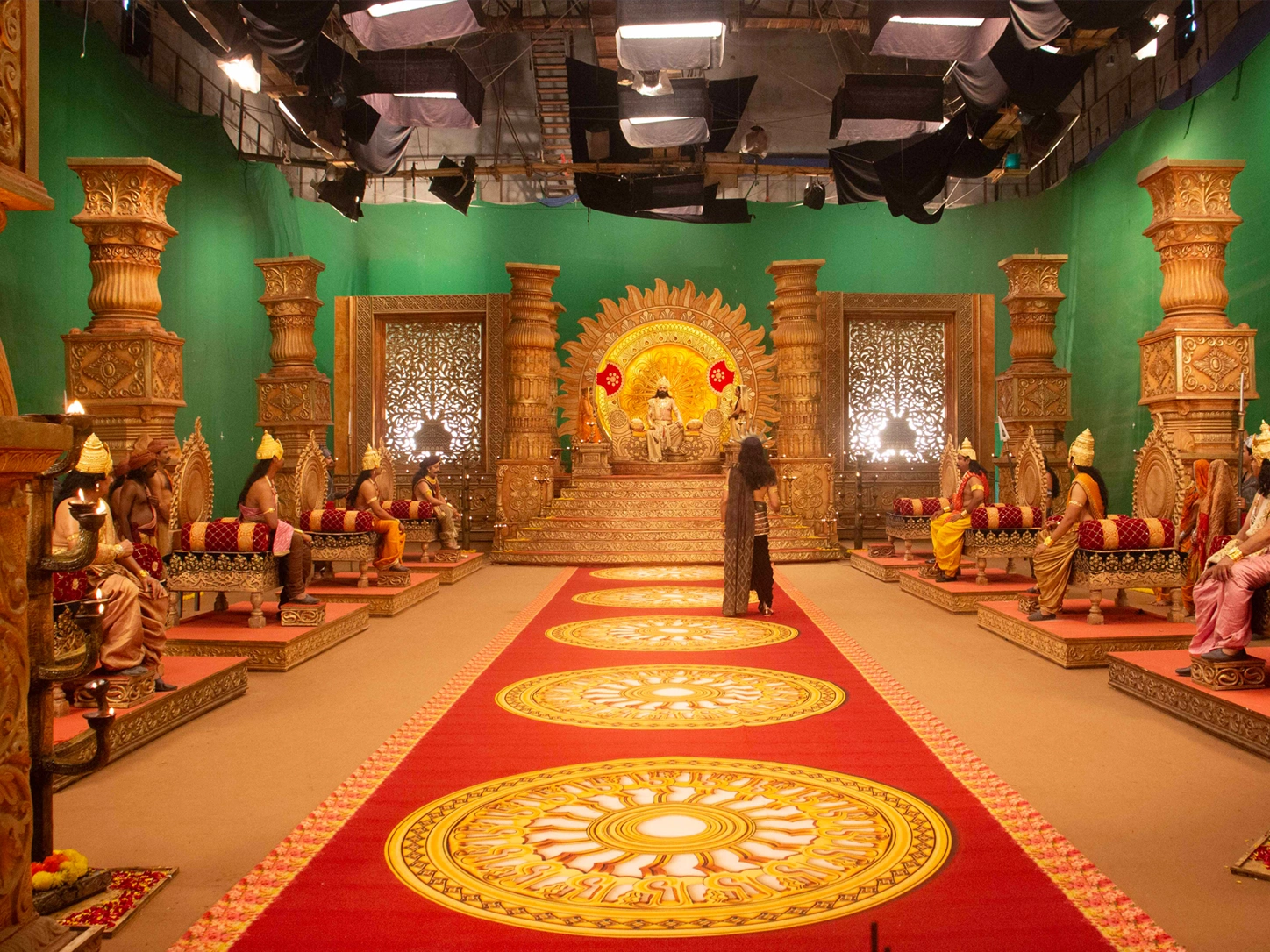
Concept art and miniatures are now brought to life-size. Sets are stood up, props arranged, and the world of the show is physically built around the lens.
01

Bringing Concepts To Life

The concept arts, drawings and miniatures are now translated into life-size modelling. As per the locations, shooting schedule, labour presence and budget, sets are stood up and the production design department starts working on the locations.

02

Props & Environment

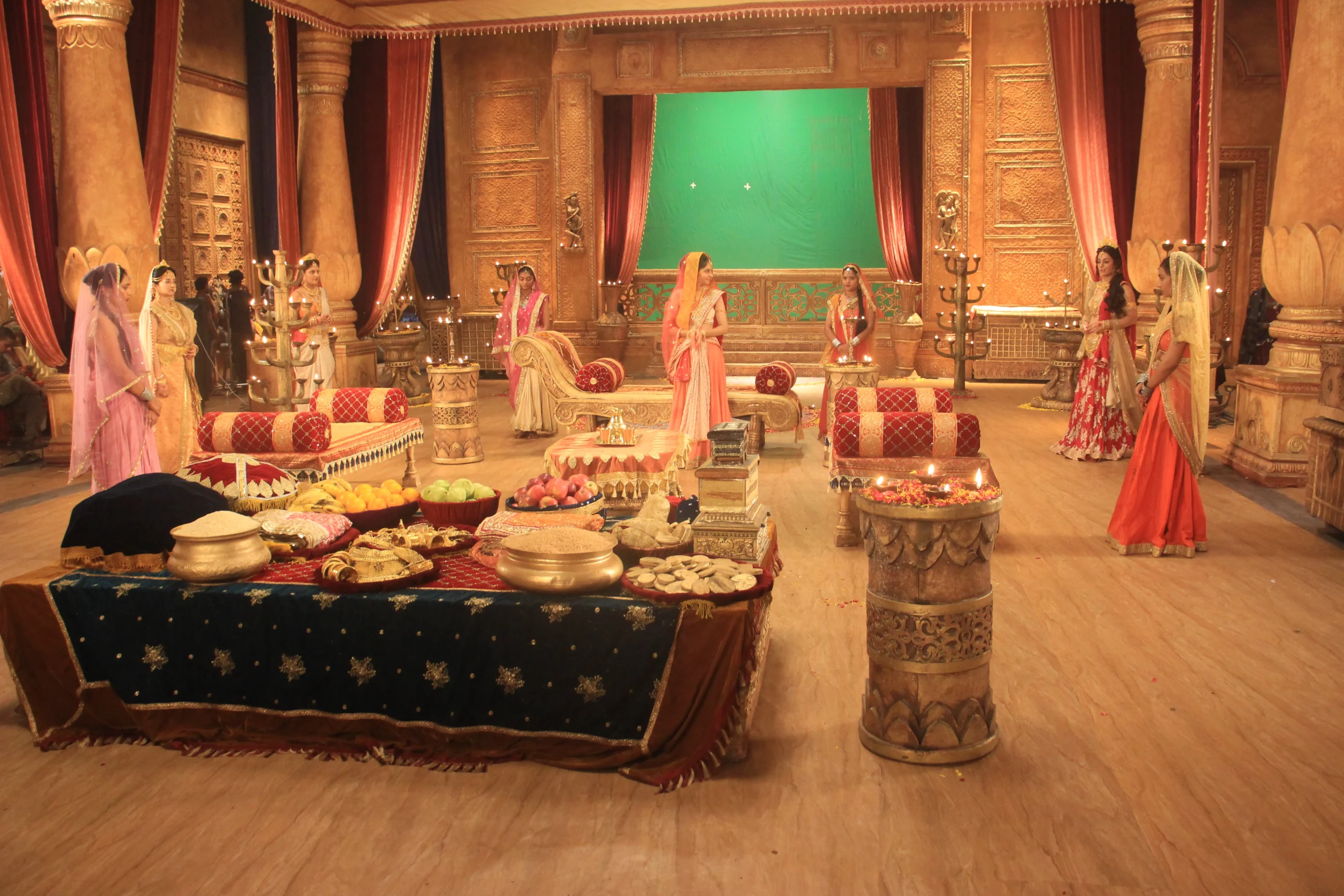
According to the scene being shot, the art department sets up the environment and makes use of both untouched and interactive props. This job is super demanding — complete set-ups before the shoot and clean-up after the shoot are hours-long, tiring jobs that demand a strong team in art direction.

STEP 04
Filming
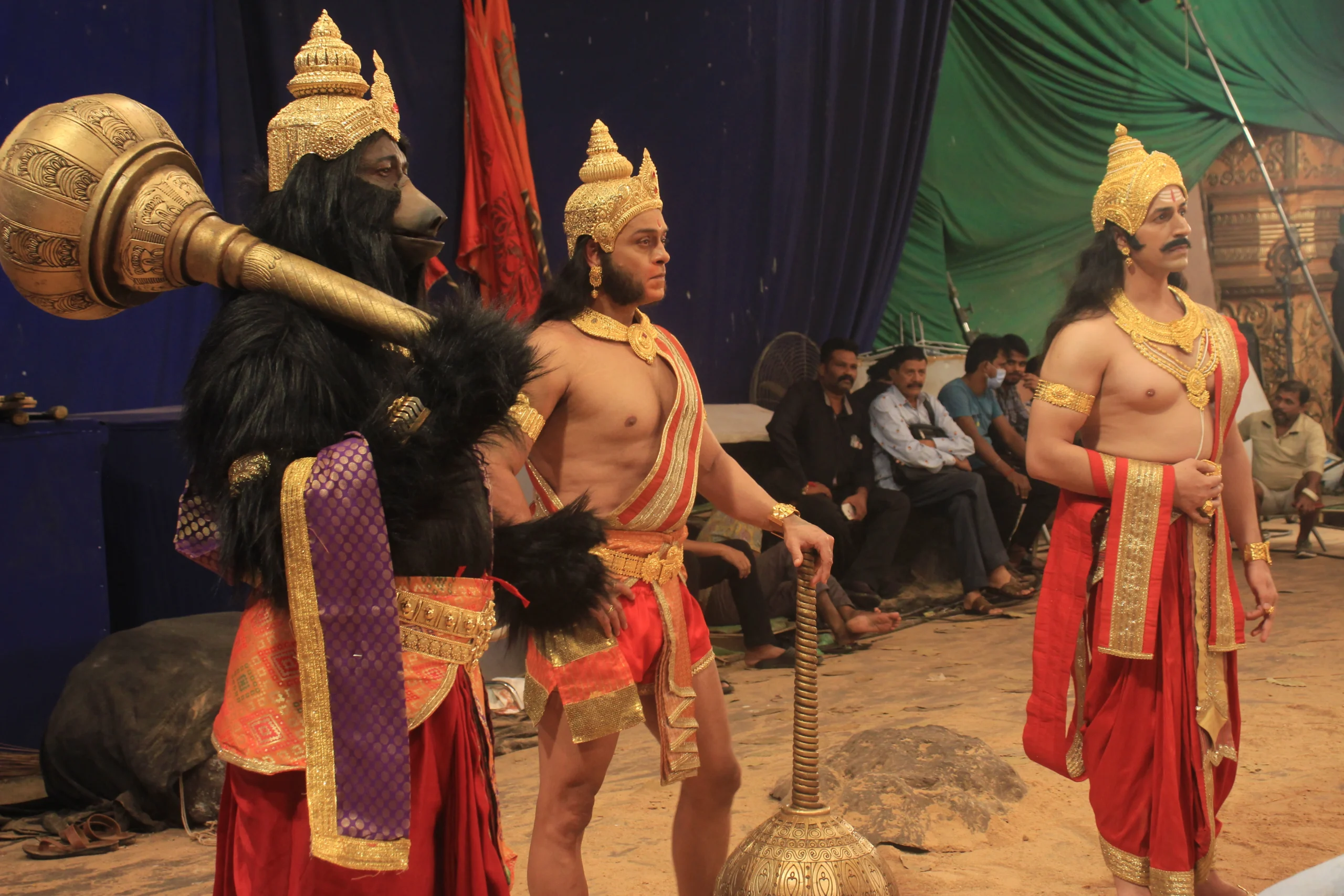
Filming is the largest proportion of production. Cameras, lights, sound and direction converge on set as every department works in coordination to capture each shot exactly as envisioned.
01

On Set

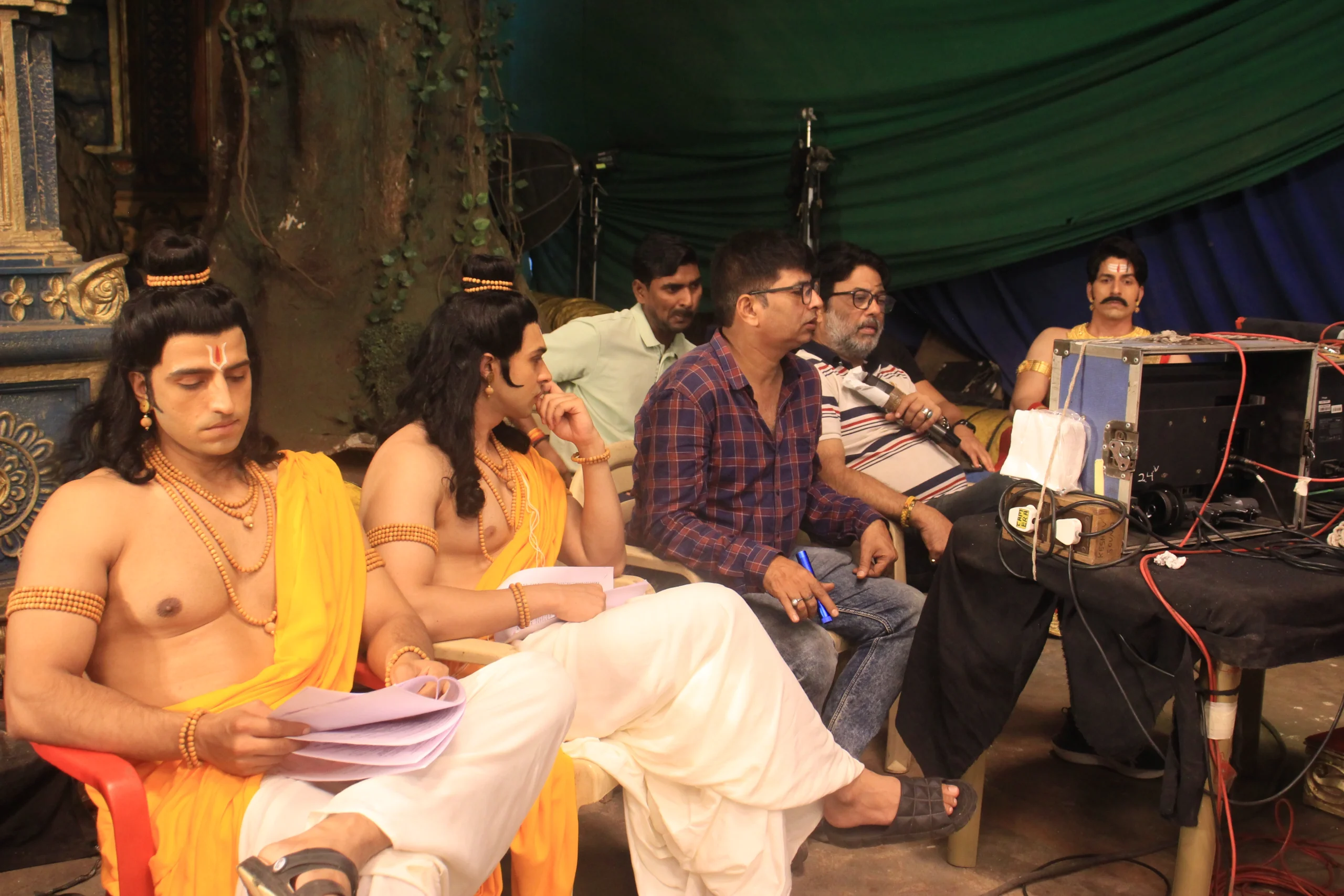
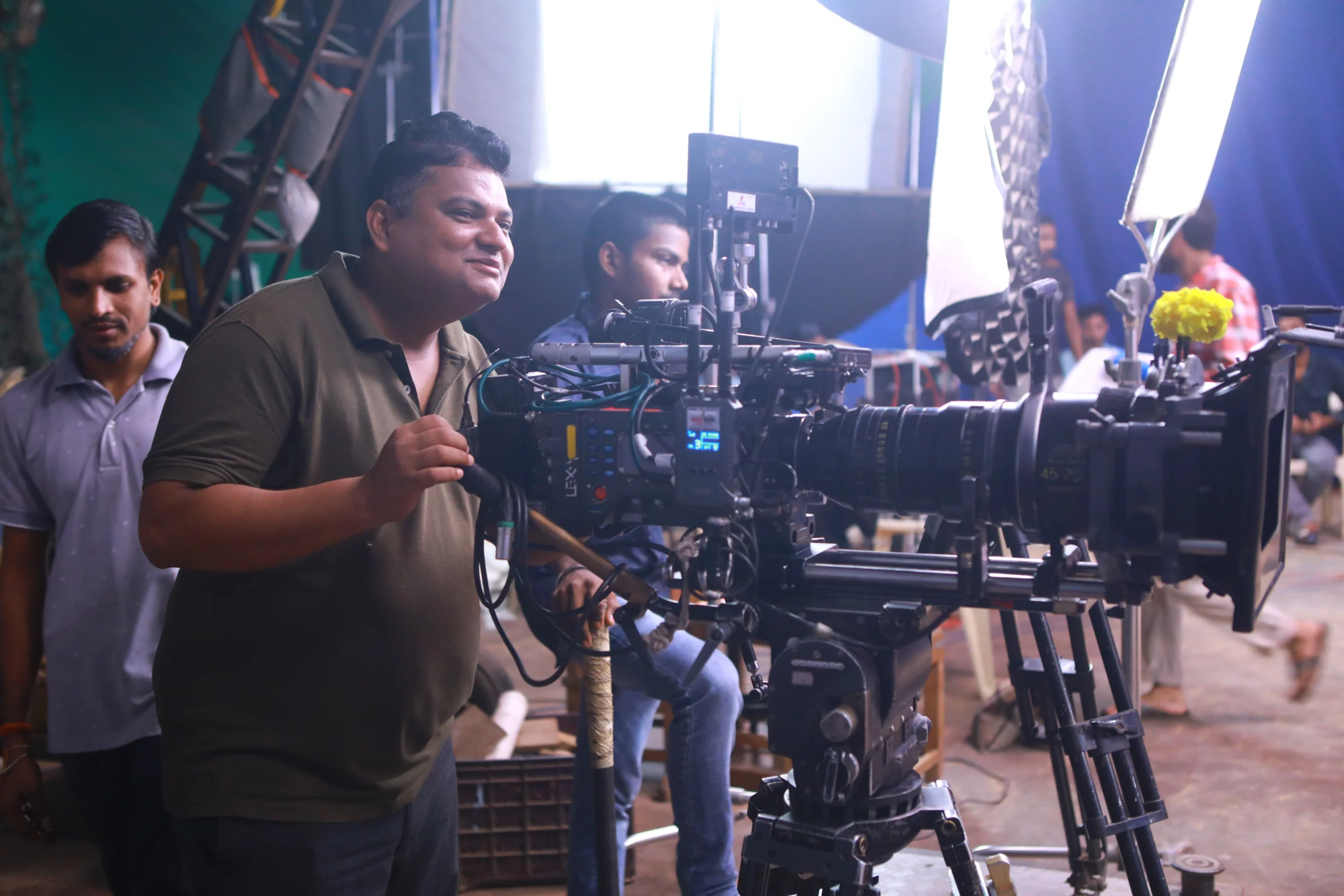
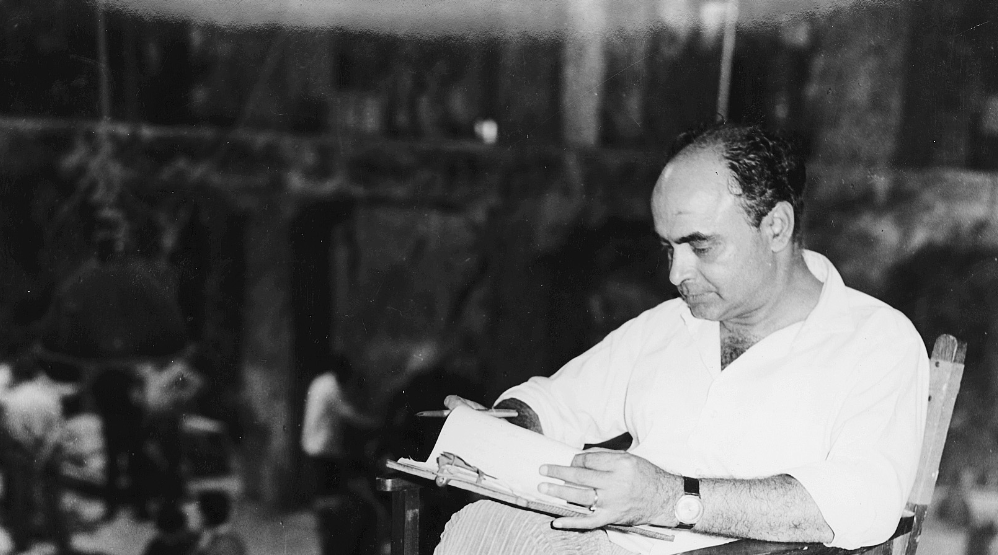
The director comes to the seat, and according to the schedule, scenes are shot in shifts with mutual coordination of various technical teams. The director sits on the monitor and stages the scene according to the screenplay. The light team subordinates with the camera team, and what brings the shot to life is an abstract feeling — a bonhomie between the director and the DOP that ensures a smooth shoot.

02

Camera Setups

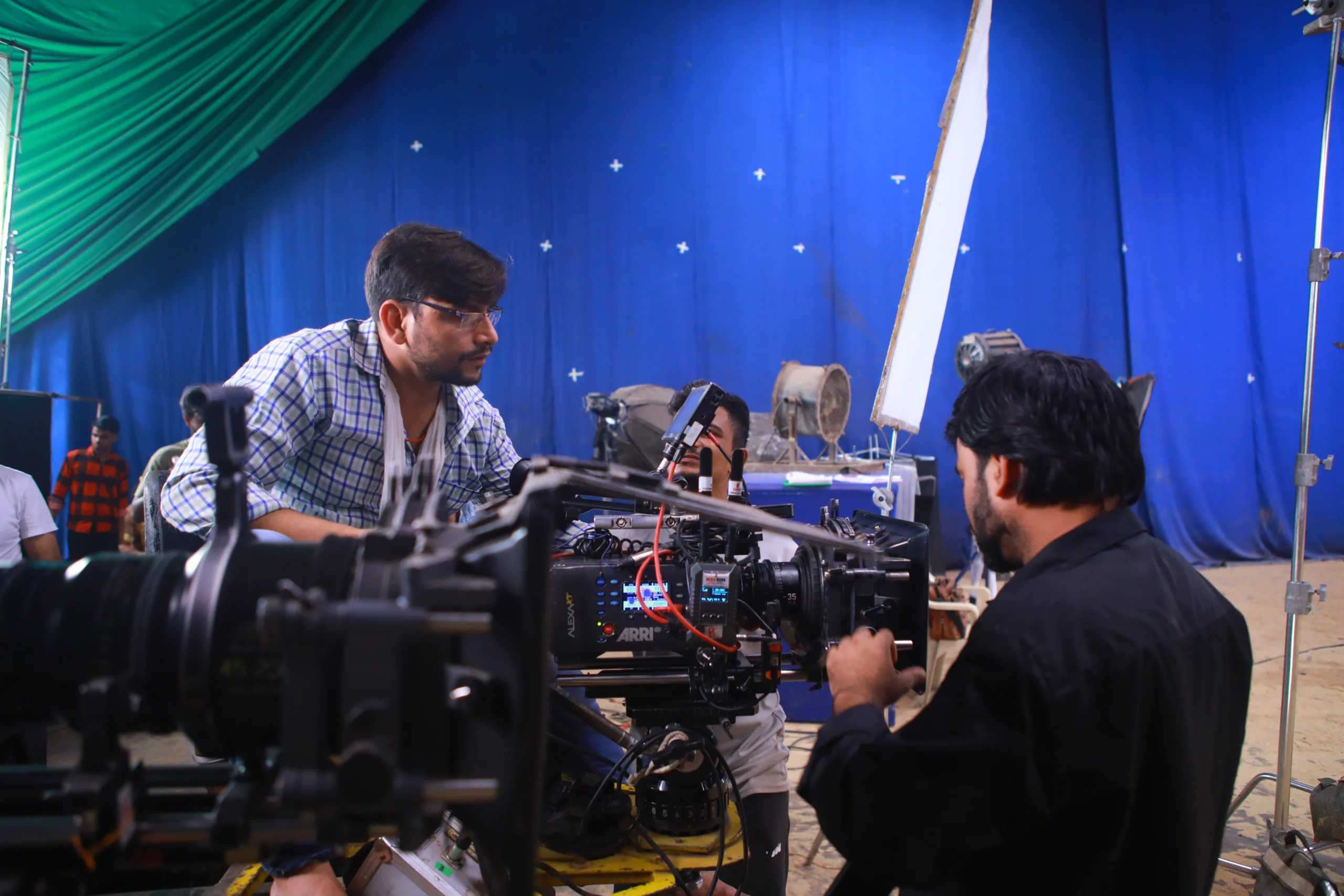
Movies are generally shot on one or two camera setups through industry-standard 1080p or 4K cinema cameras such as Arri Alexa, Blackmagic Design Cinema Camera and Canon Cinema EOS. TV serials are shot on multi-camera setups with major focus on tight shots and close-ups, since the TV format is a close-up medium watched on small screens. India's huge television audience elevates the emotional quotient, and modern HD shoots commonly use Sony's high-end 4K and F5 cameras.

03

Lighting & VFX Coordination

According to the scene division and storyboard, each frame is shot in close coordination with the VFX teams — green screen and blue screen shots are major in mythological shows. Light direction, shadow, colour temperature and saturation must be precise, especially in TV shows. Matte paintings are made beforehand digitally and used to set lights accordingly, with props, set extensions and shadow placement supervised across departments.

04

Sound On Set

Sync sound is generally used for efficient working, with RODE mics recording dialogues of the actors on set. However, dubbing still takes place in post-production, since a lot of ambient sound from the set also gets recorded. Once every sector works together on a shot according to the director's choice and pre-production standard, a shot is finalized.

05

Schedule Wrap

And this is how the whole screenplay is justified, and the shoot is completed in scheduled time — every department's work culminating in raw footage that's ready to enter post-production.

PARTNER WITH SAGAR WORLD
Ready To Roll Cameras
On Your Vision?
Every great performance begins long before the camera rolls. Partner with our team to discover the human being your character has been waiting to inhabit.