Post – Production

Post – Production

EDIT & VFX
Post –
Production

Where raw footage becomes a finished story — editing, VFX, sound design and alignment converge to shape every frame and feeling before it reaches the audience.

STEP 01
Editing
After the shoot is over, the real process of bringing what’s on camera to something that can be presented to the audience starts — a completely technical journey that makes up nearly 30 percent of the whole filmmaking.
01

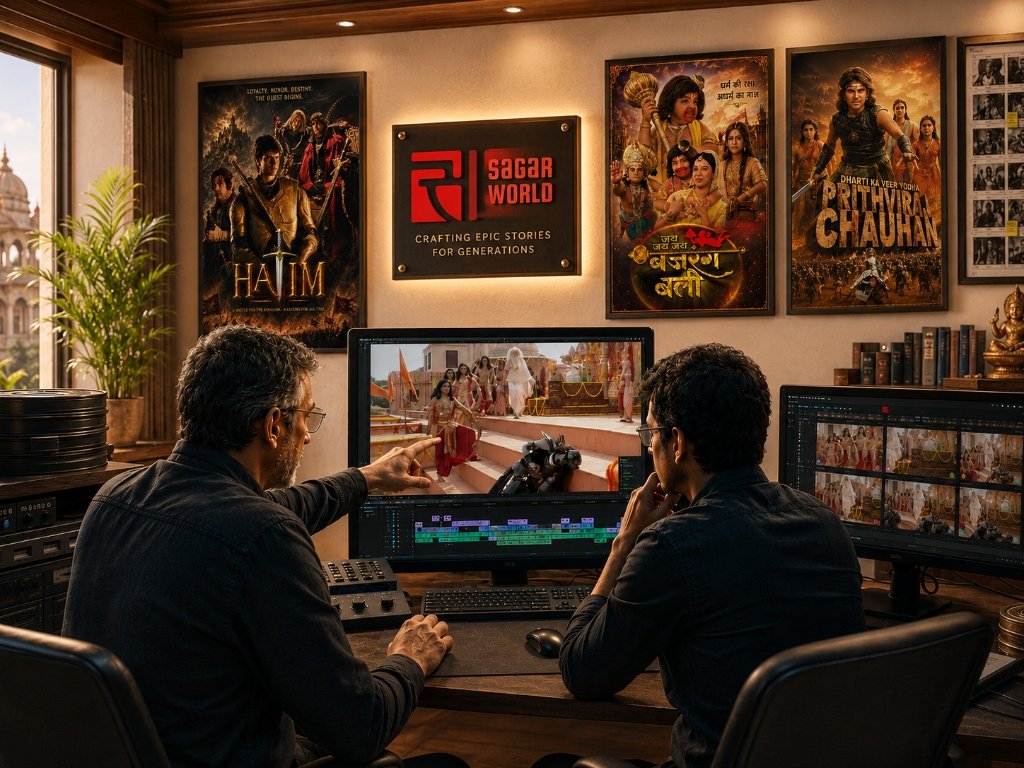
Shot Selection

When the filming is done, certain takes are obtained by the director for each scene depending on various factors — good acting, nice lighting, a strong frame. These takes are noted by the director's team and passed on to the editorial room, where the director, along with the Editor, selects the perfect shot that justifies the actor's face continuity, lighting continuity and the smooth flow of transition between scenes.

02

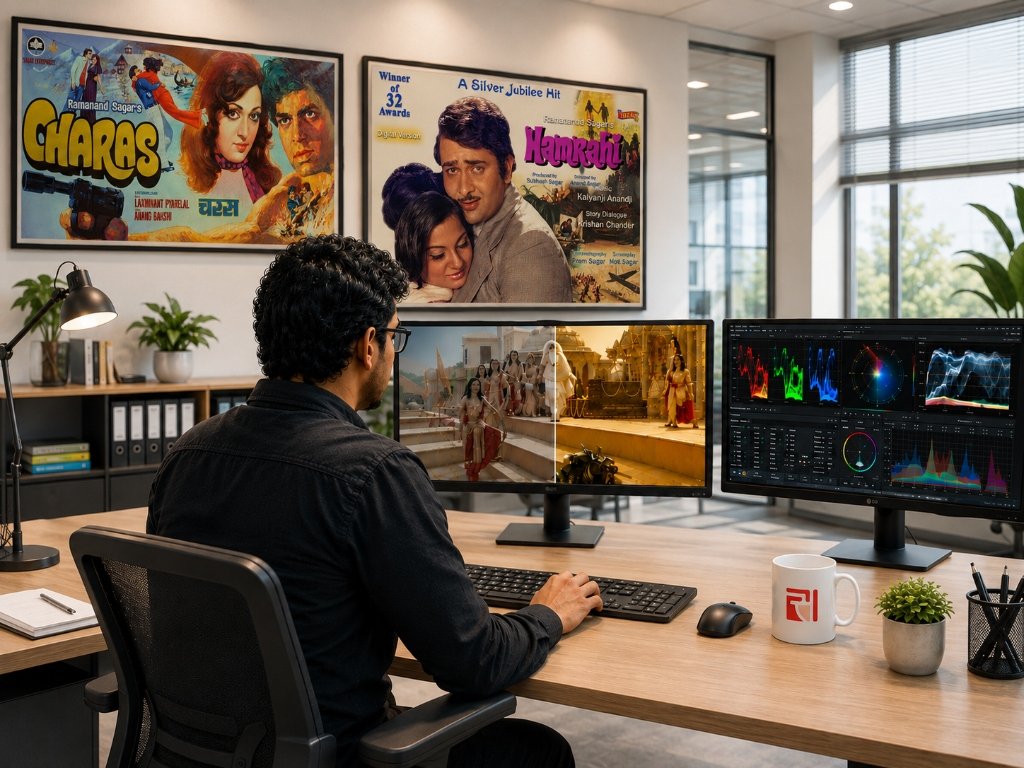
DI And Colour

When a movie or show is shot, it's captured without filters in true lighting. Every product needs retouching and enhancement — this is where the mood board from pre-production steps in. According to the tone of the scene, complementary colours are layered onto the original plate to create impact. Battle scenes are graded in earthy tones such as brown and yellow, whereas light-hearted scenes call for bright grading with green saturation. DI is processed in dedicated software like DaVinci Resolve 17 and Final Cut Pro X.

STEP 02
VFX, CGI & Visual Effects
Production
An area that is taking over modern production and filmmaking — though it runs simultaneously through pre-production and production, its final form takes shape in post-production.
01

Bringing The Frame To Life

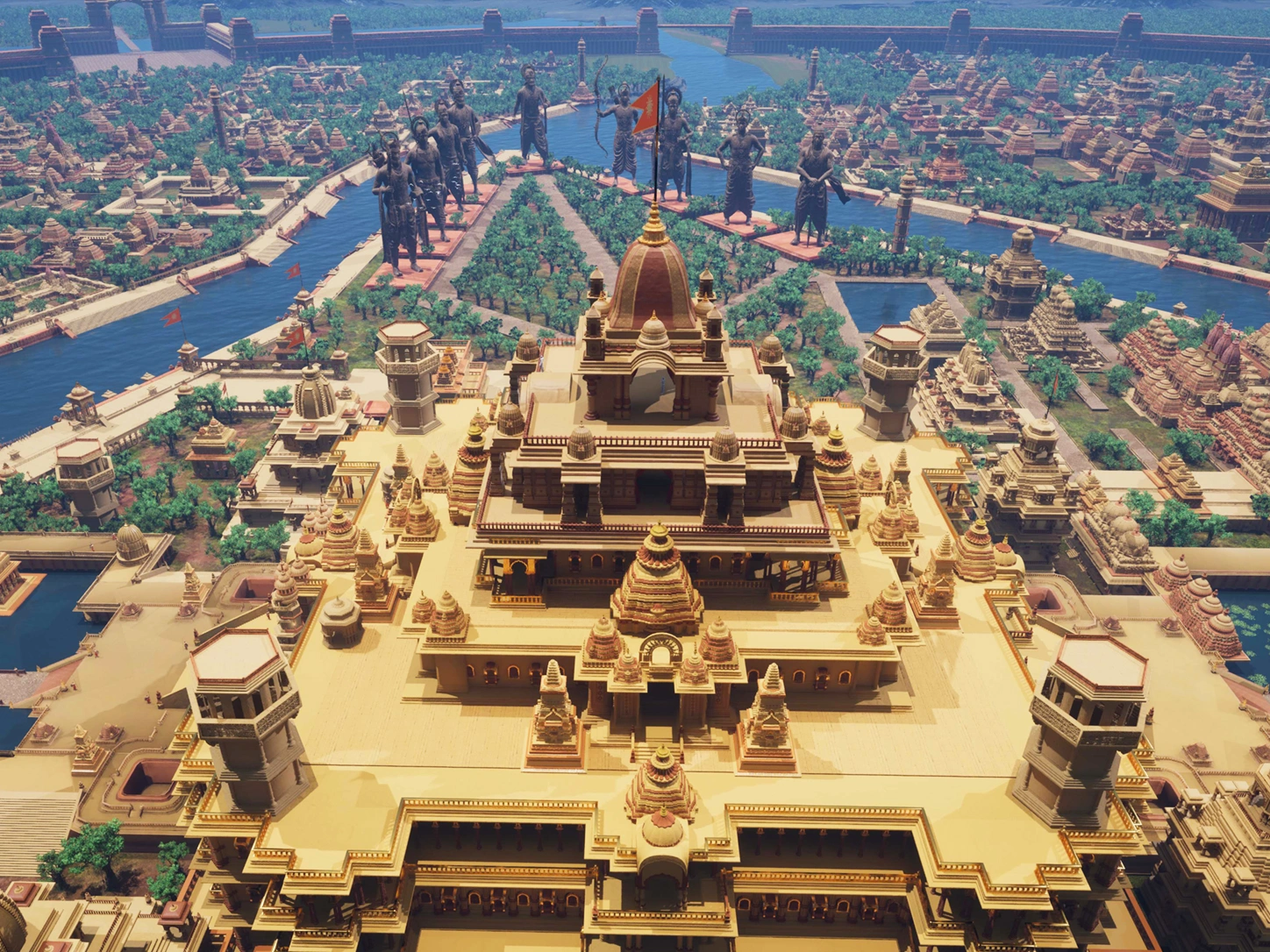
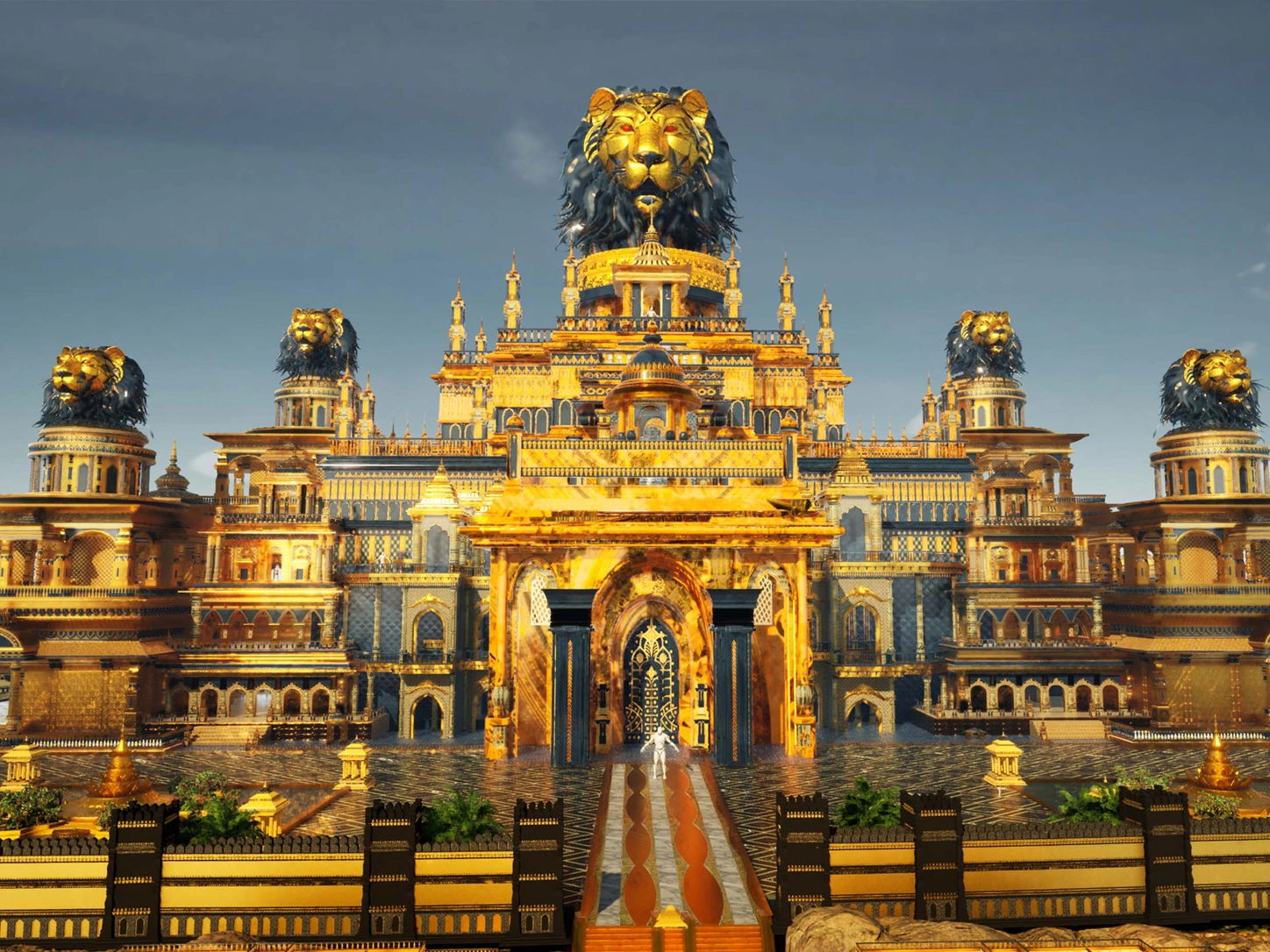
Concept arts, green-screen shots and motion-capture footage are developed according to the final VFX-broken-down scenes. VFX are live-action shots and digital imagery derived sequences, while CGI is used to create images and characters. Mythological shows are incomplete without this work — a large area in each frame is taken by VFX, whether cosmic or inter-celestial backdrops, humanoid creatures and villains, animals, or larger-than-life palaces that could not be captured through sets.

02

Industry Workflow

In the market, particular companies provide industry-approved VFX with divided teams across sectors such as composition, rendering, simulations and dot imaging — each garnishing the final look of the scene on screen. This pipeline allows mythological storytelling to scale visually beyond what any practical set or location could deliver.

STEP 03
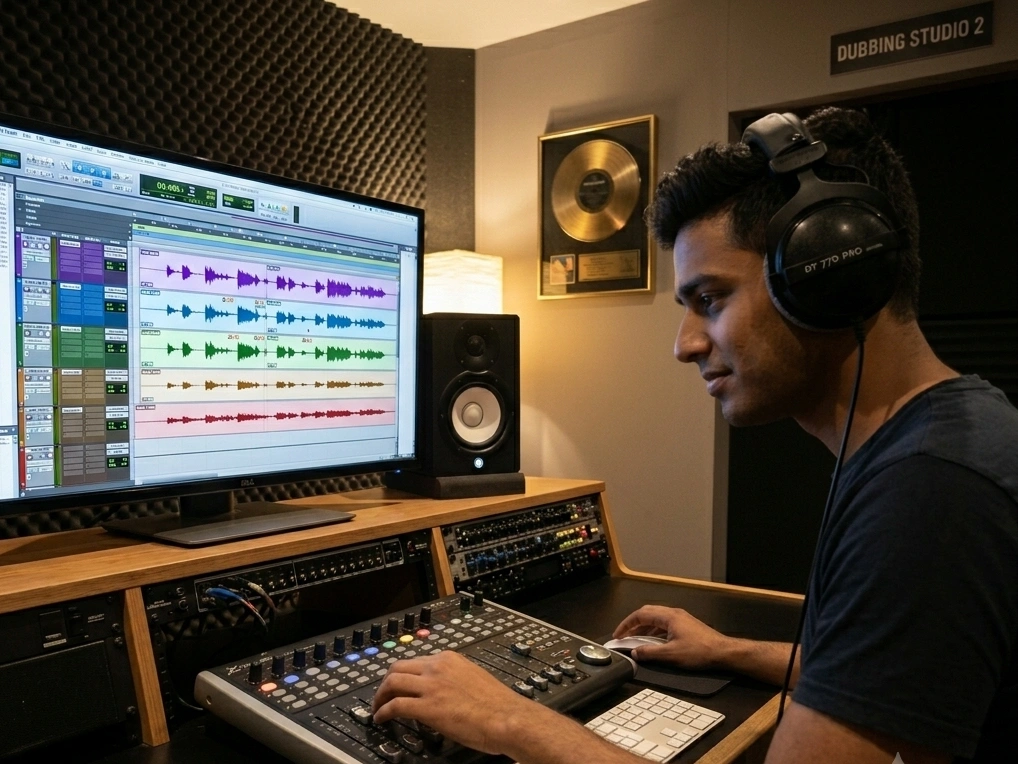
Sound Designing
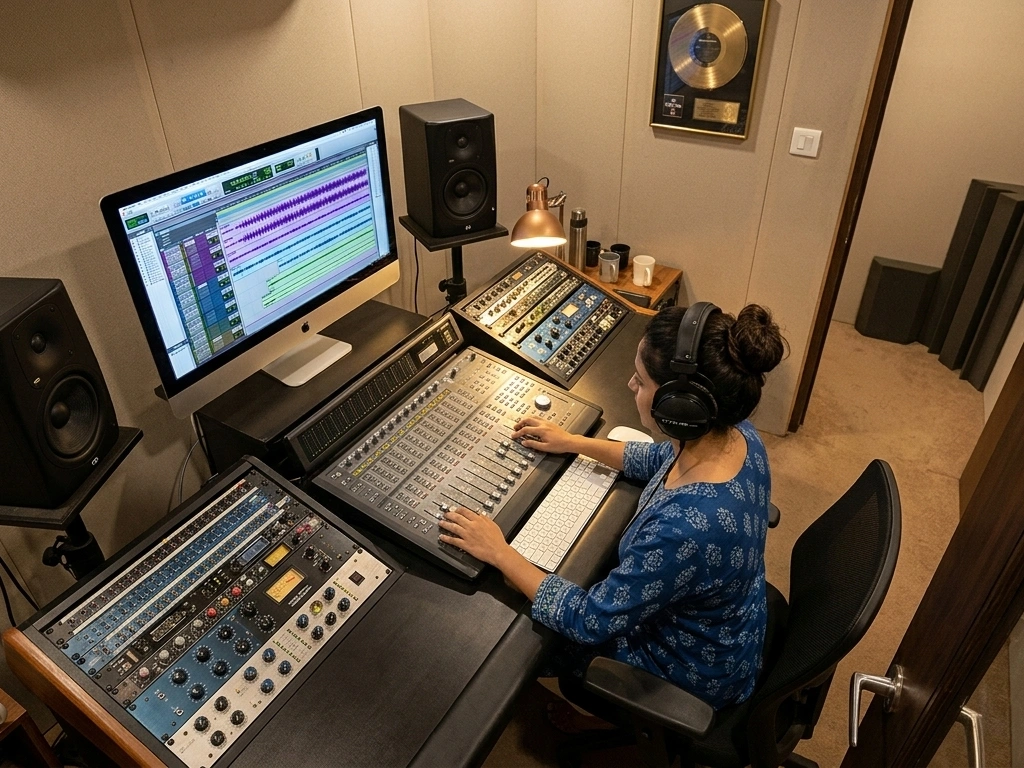
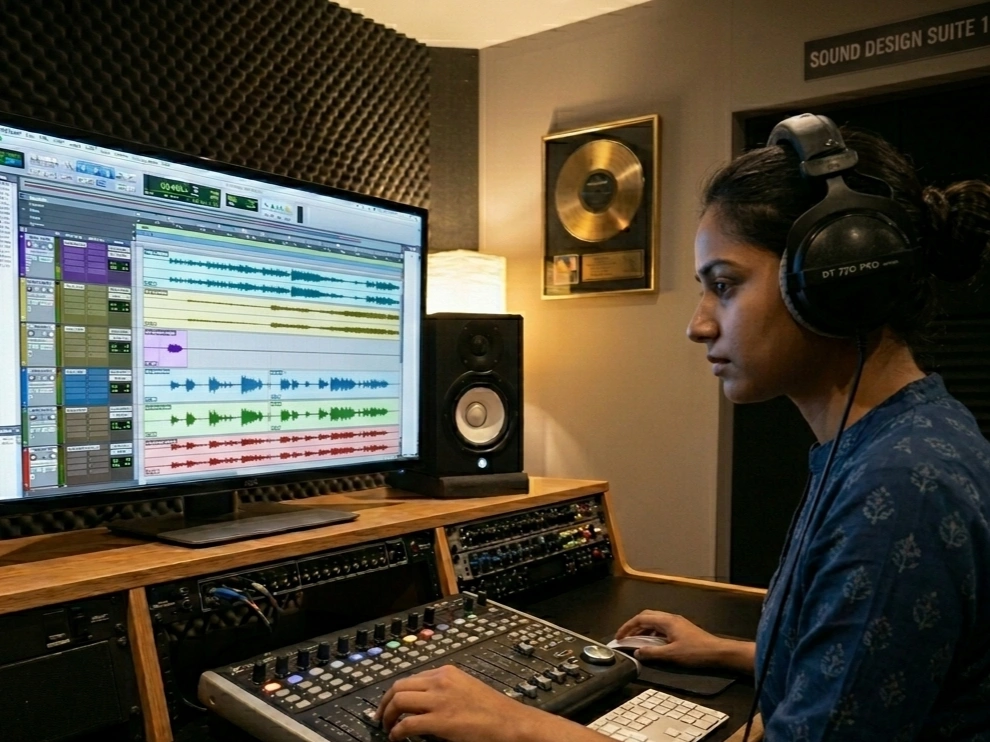
Humans sense cinema through two feelings — visual aid and sound. Surprisingly, 80% of cinema is just sound. Without sound, there is no emotion in the product, no matter how great the flow of events and the acting is.
01

BGM

Music does not need any language. To express any emotion — happiness, grief, rage, longingness or drama — all that's needed a tone with no words. This is what BGM (Background Music) is. Placed in the background of dialogues to bring out the intensity of the scene, in mythological shows there is an immense need of BGM that aligns with its theme of Hinduism. Use of classical instruments, Taals and Murkhis sets a theme of ancient times without techno sounds.

02

SFX

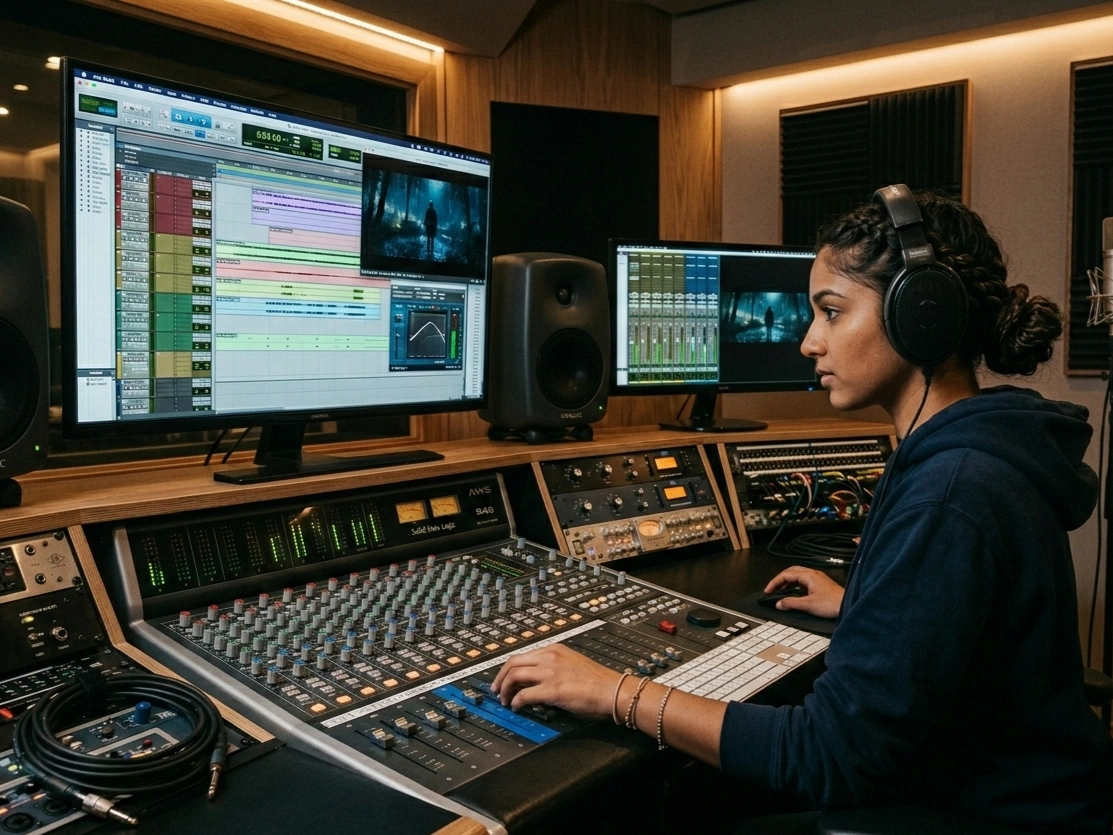
SFX are sound effects used to justify any action in a particular scene. Mythological films deal with so much environment that this is a huge void to fill. For things that can't be recorded on amplified-level camera — environmental sounds like wind, water, fire, inter-celestial sounds, power-show sounds, battle sequences — SFX provides the ambience. These effects are loaded from databases and used to create illusions impractical in a live-action shot.

03

Foley

Foley is derived from SFX but is hugely broad in application. It's a technique of creating sounds for smaller details that bring authenticity and effect to a scene. In a dedicated foley studio, artists create sounds for everyday events — walking, slapping, keeping things — using techniques and devices that resonate to the actions on screen, recorded in front of foley-fit mics with zero ambience.

STEP 04
Dubbing, Songs & Alignment
The final layers of post-production — language, melody and synchronisation — that turn raw cuts into a finished episode or film ready for the audience.
01

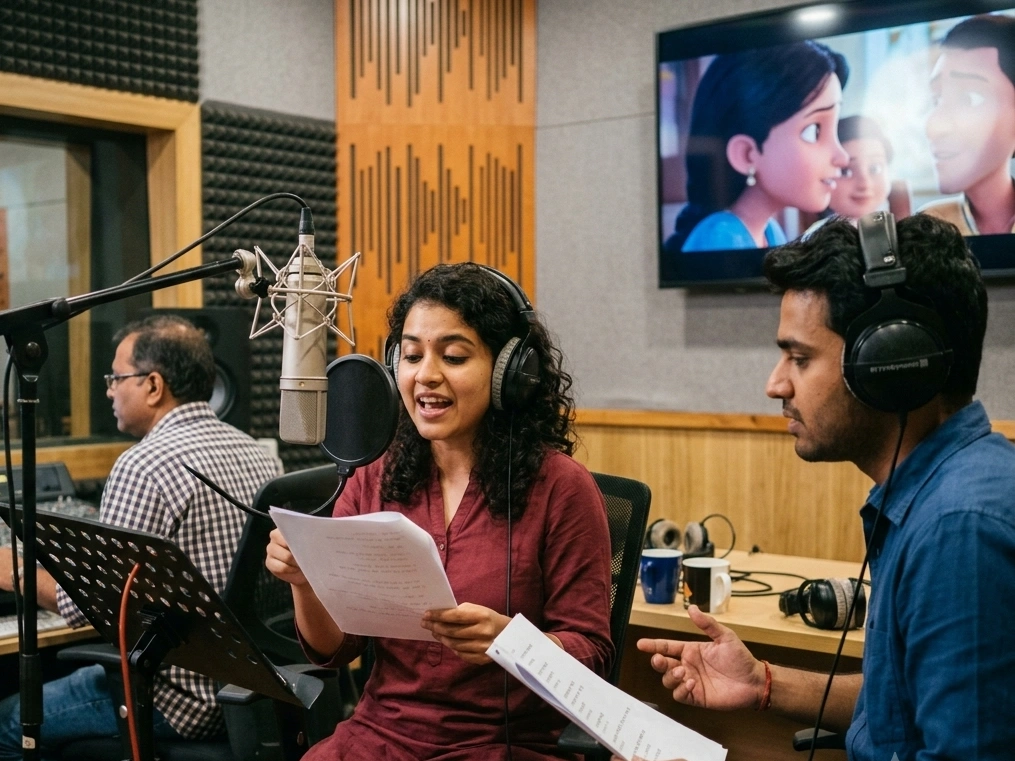
Dubbing

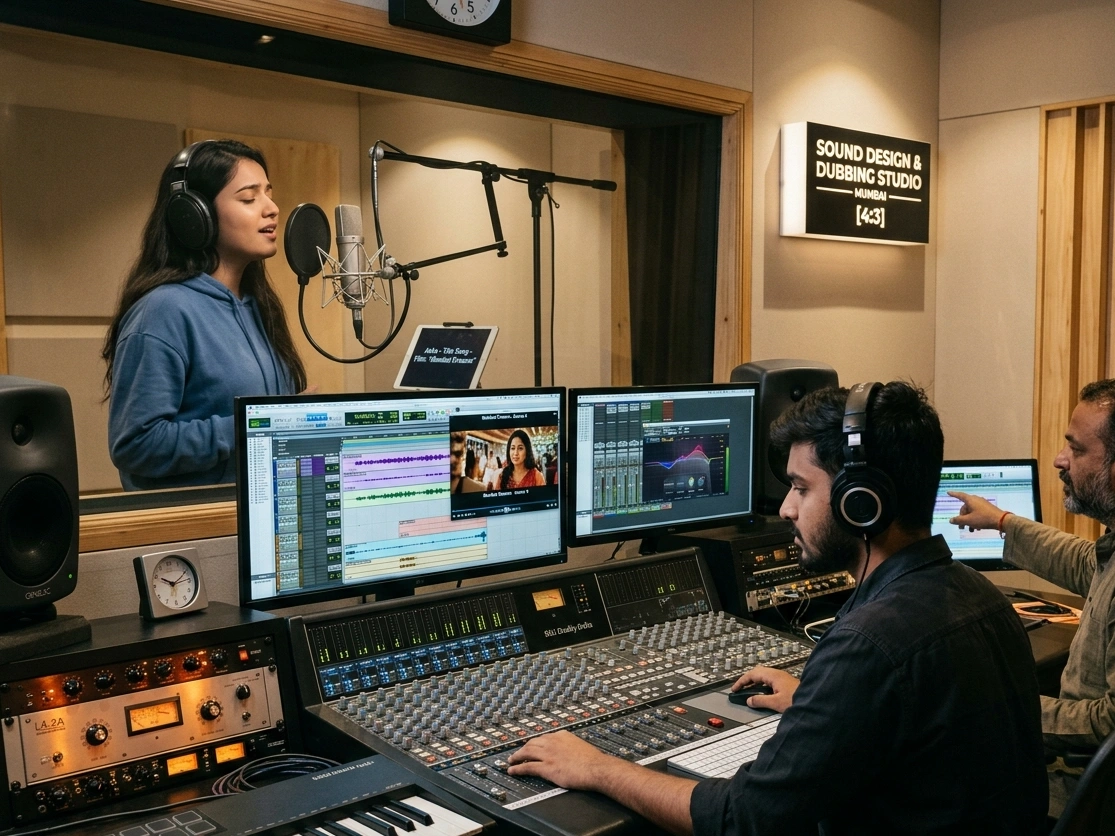
Dubbing is majorly done when sync-sound has not been used in the shoot, i.e., final dialogues are not recorded directly while acting. It helps in improving mistakes even when sync sound is used, and paves the way for shows towards PAN India release. When the original language differs from the recipient's mother tongue, dubbing becomes a saviour — recently broadening into Bengali, Marathi, Telugu and more. Dubbing also helps if the actor is not present due to commitments or other factors.

02

Songs

Mythological and historical shows by Sagar World depend highly on educating the audience alongside entertainment. In the screenplay, certain sections need to be transcribed swiftly and effectively in the audience's mind, since the runtime is low. So, what's better than songs! These are not just regular songs but melodies conjoined with ancient proses, poems, holy shlokas, modern aartis and dohas. With classical instruments and monumental composition, songs and complete albums are developed that are both narratively useful and act as promotional pieces.

03

Alignment

When a complete rendered video sequence plate is layered with the extracted final audio file, a final product is developed — the show episode or film, ready to be promoted and finally showcased on screen.

PARTNER WITH SAGAR WORLD
Let’s Bring Your Footage
To Its Final Form
From edit to final mix, our post-production team refines every frame and sound until your story is ready to meet the world.